XC.

01 / Project Overview · Emerge Performance

Applying the
Enso Coaching Model.

Interactive eLearning Development

A self-paced coaching module connecting Enso principles with practical questions, GROW conversations, and reflective practice.

Module 9 of an Emerge Performance coaching programme, developed in Articulate Rise 360. The experience moves from understanding the model to exploring coaching scenarios, checking knowledge, and reflecting on practice.

Explore the Interactive Course

Standalone demo of the original Rise 360 module. LMS tracking, SCORM reporting, and persistent learner progress are not supported.

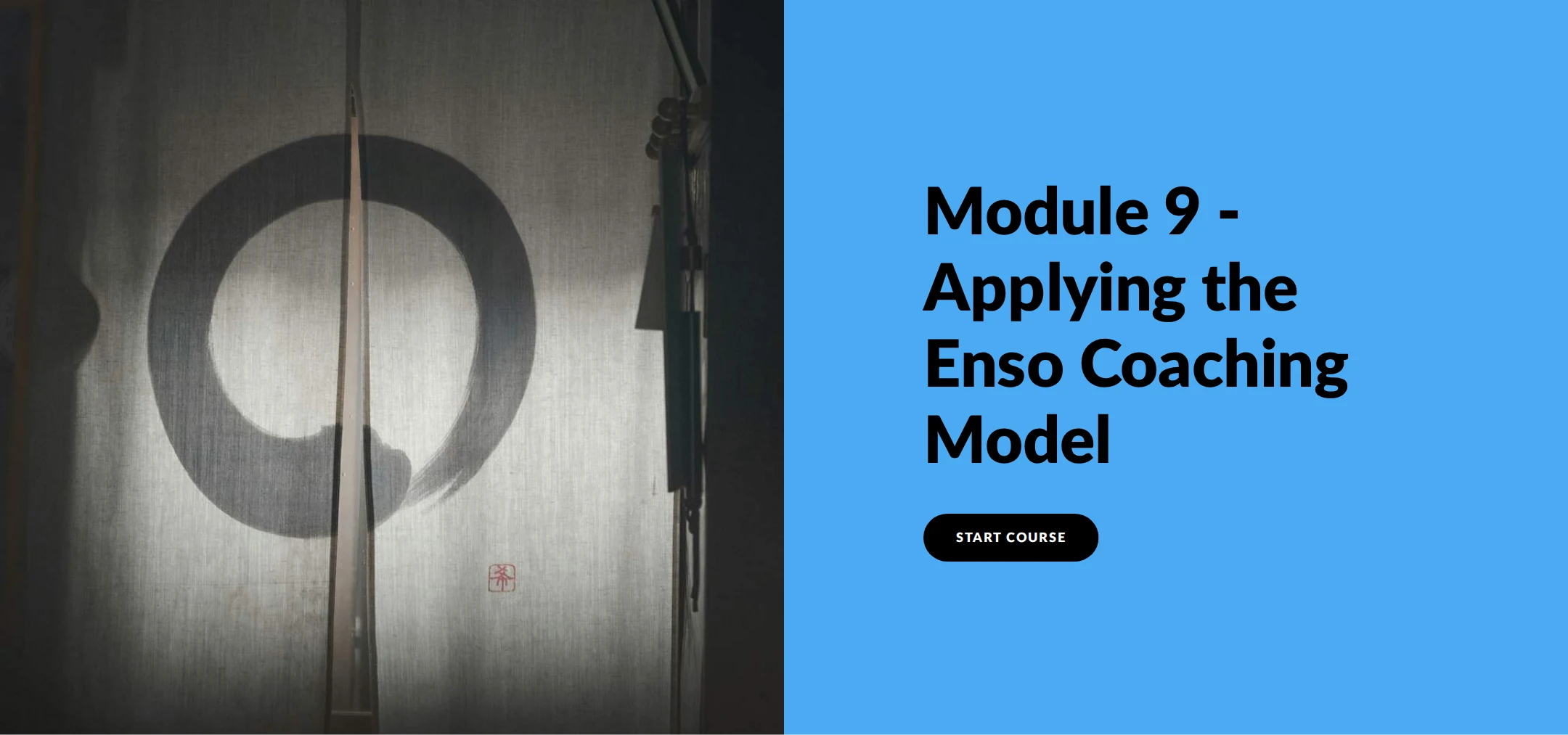
Rise 360 Module 9 landing screen with an Enso circle image, the Applying the Enso Coaching Model title, and Start Course button.
A clear entry into Module 9

The original course landing screen introduces the module and provides a single starting point.

View full-size image ↗

02 / Learning Challenge

From a framework
to a conversation.

Translate an abstract, cyclical coaching framework into a sequence learners can explore and connect to real coaching conversations.

03 / My Role & Tools

Design & development

Role
Instructional design & eLearning development
Tools & delivery
Articulate Rise 360 · SCORM 1.2

Developed as part of my Instructional Designer work at Emerge Performance. This case study focuses on the module’s learning structure and Rise 360 implementation; coaching frameworks and shared course materials are not presented as my sole authorship.

04 / Instructional Design Approach

Concept. Example.
Application.

The module introduces the model, then revisits it through two recurring scenarios: Emma, a new team leader building trust, and David, an executive balancing competing demands. Example questions make the connection between each principle and a coaching conversation explicit.

  • Understand the Enso Coaching Model
  • Apply its components in coaching sessions
  • Develop questions for each stage
  1. Understand Enso
  2. Explore scenarios
  3. Connect with GROW
  4. Check knowledge
  5. Reflect on practice
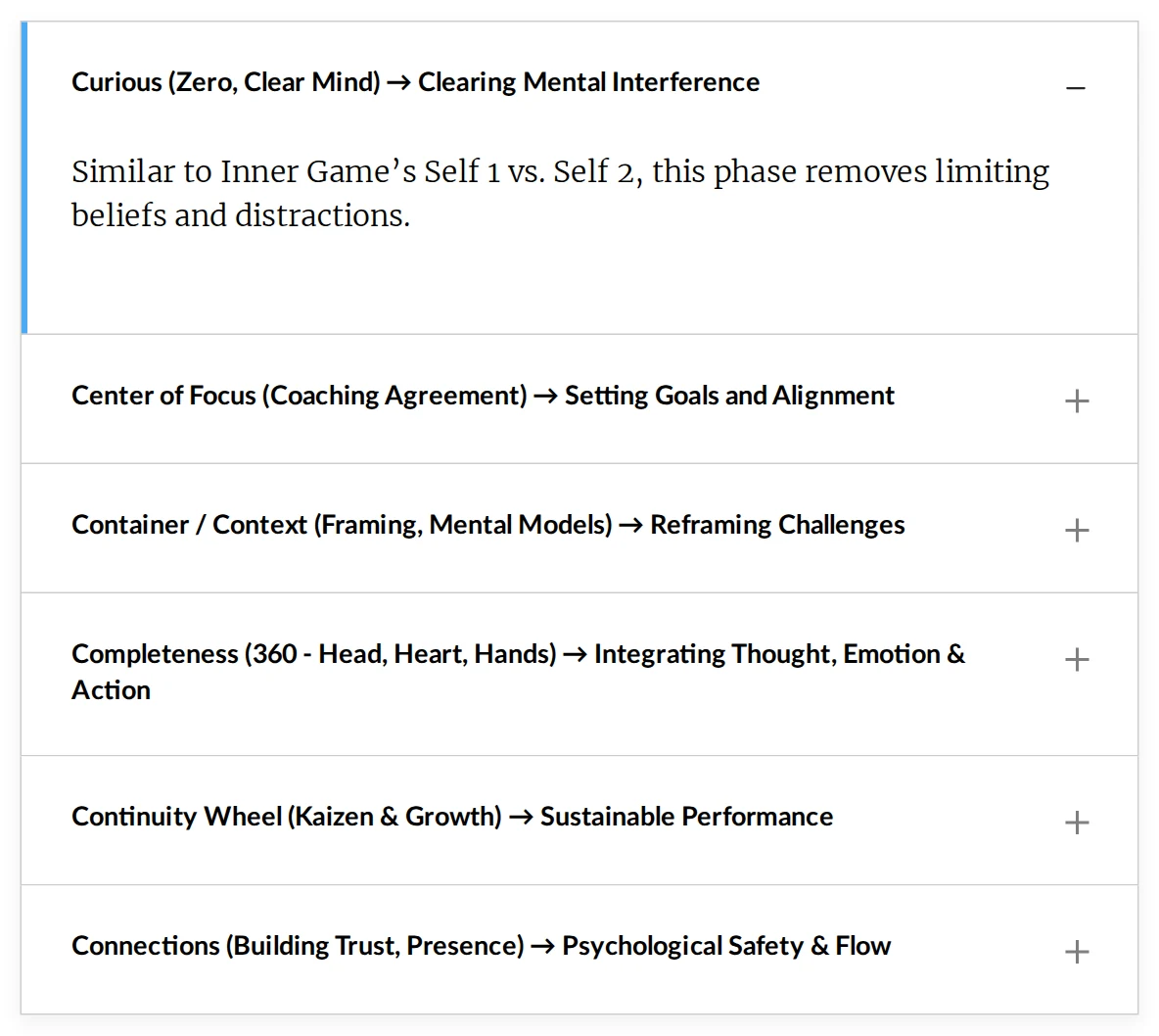
Rise 360 accordion listing six Enso aspects, with Curious expanded to explain clearing mental interference.
Explore the Enso performance cycle

Six expandable aspects include Connections, Curious, Center of Focus, Container / Context, Completeness, and Continuity Wheel. The open row connects curiosity with mental clarity.

View full-size image ↗

05 / Interactive Learning Experience

Reveal a question.
Explore a model.

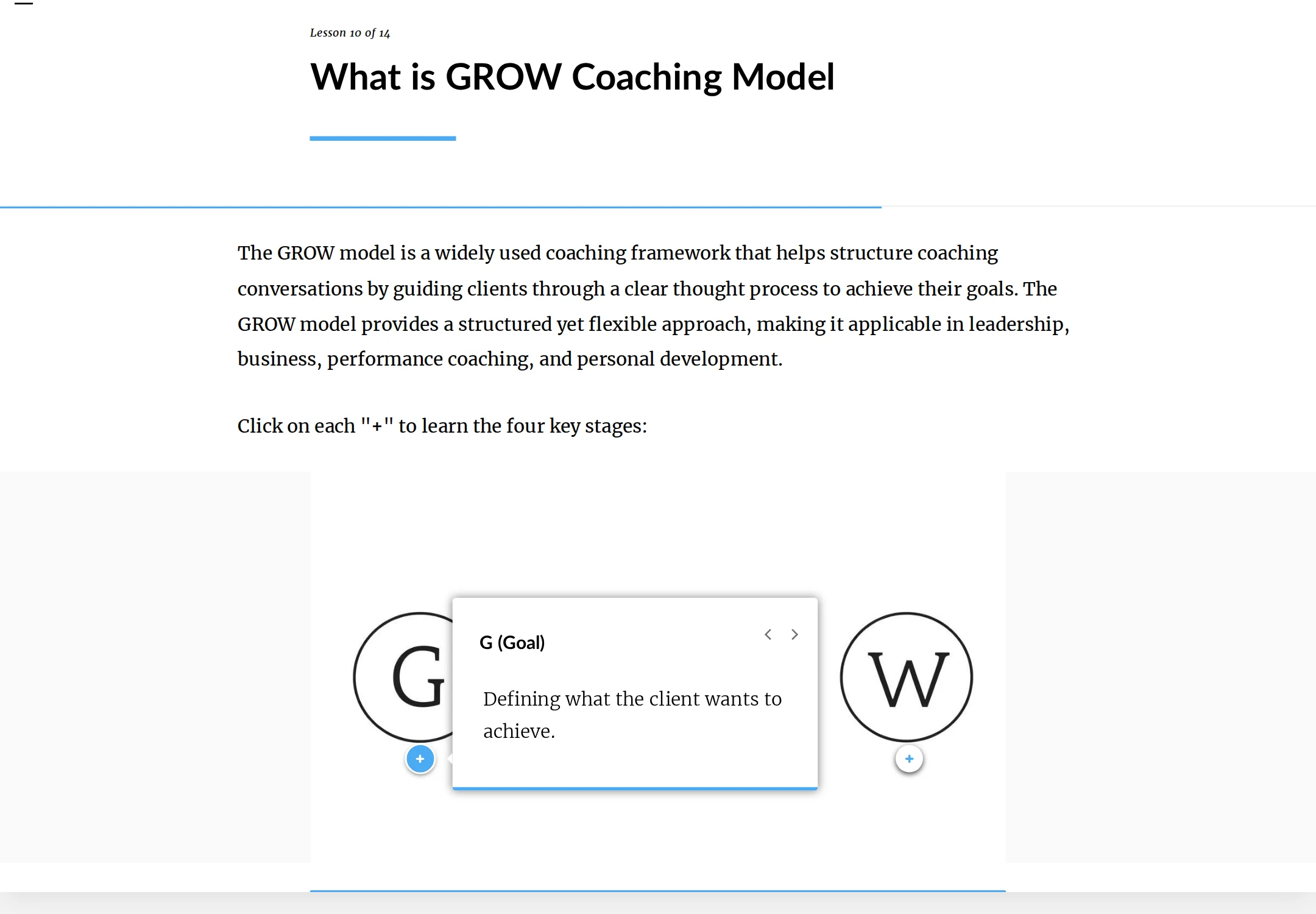
Different interactions serve different learning tasks: accordions segment the framework, flashcards reveal example questions, and hotspots explain GROW one stage at a time.

Scenario-Based Learning — Applying Coaching Questions

Two workplace scenarios put coaching principles in context. Learners reveal example questions and move through a guided conversation. These are linear examples, without decision-dependent paths.

Emma · Building trust

A newly promoted team leader struggles to connect with her team. Flip cards reveal questions about the session goal, success measures, and specific outcomes.
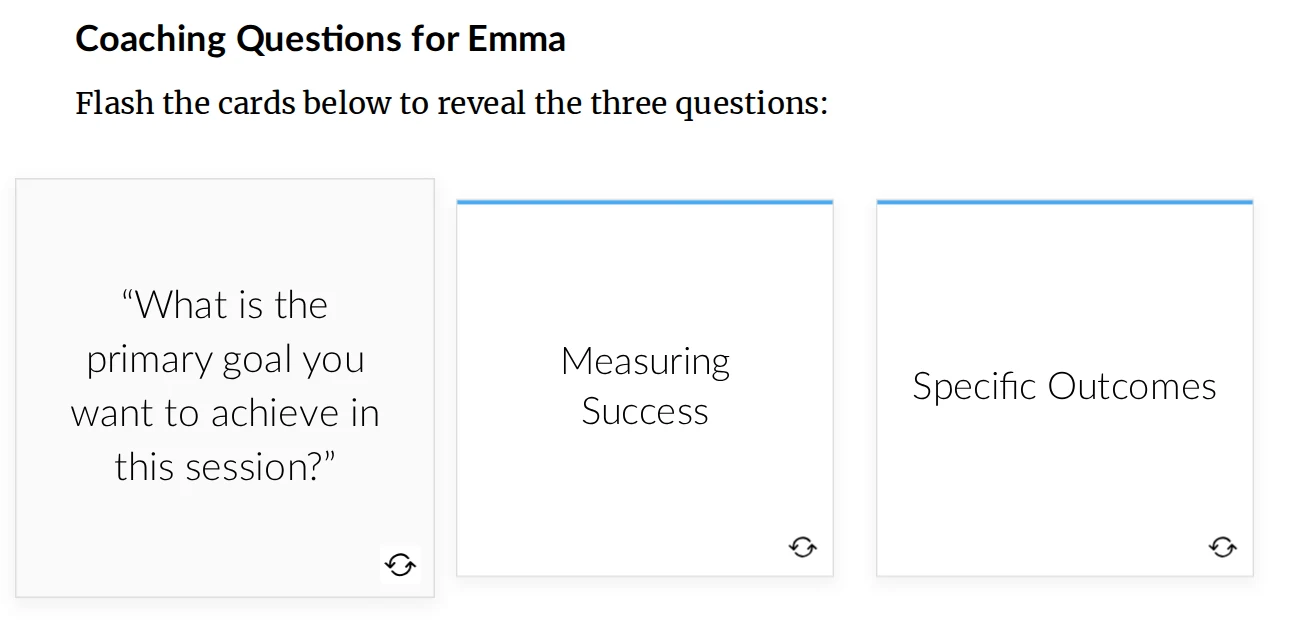
Center of Focus flashcards with one card flipped to reveal an example coaching question about the session goal.
From a principle to a coaching question

In Emma’s scenario, flip cards connect a coaching agreement with a primary goal, success measures, and specific outcomes.

View full-size image ↗
David · Work–life balance

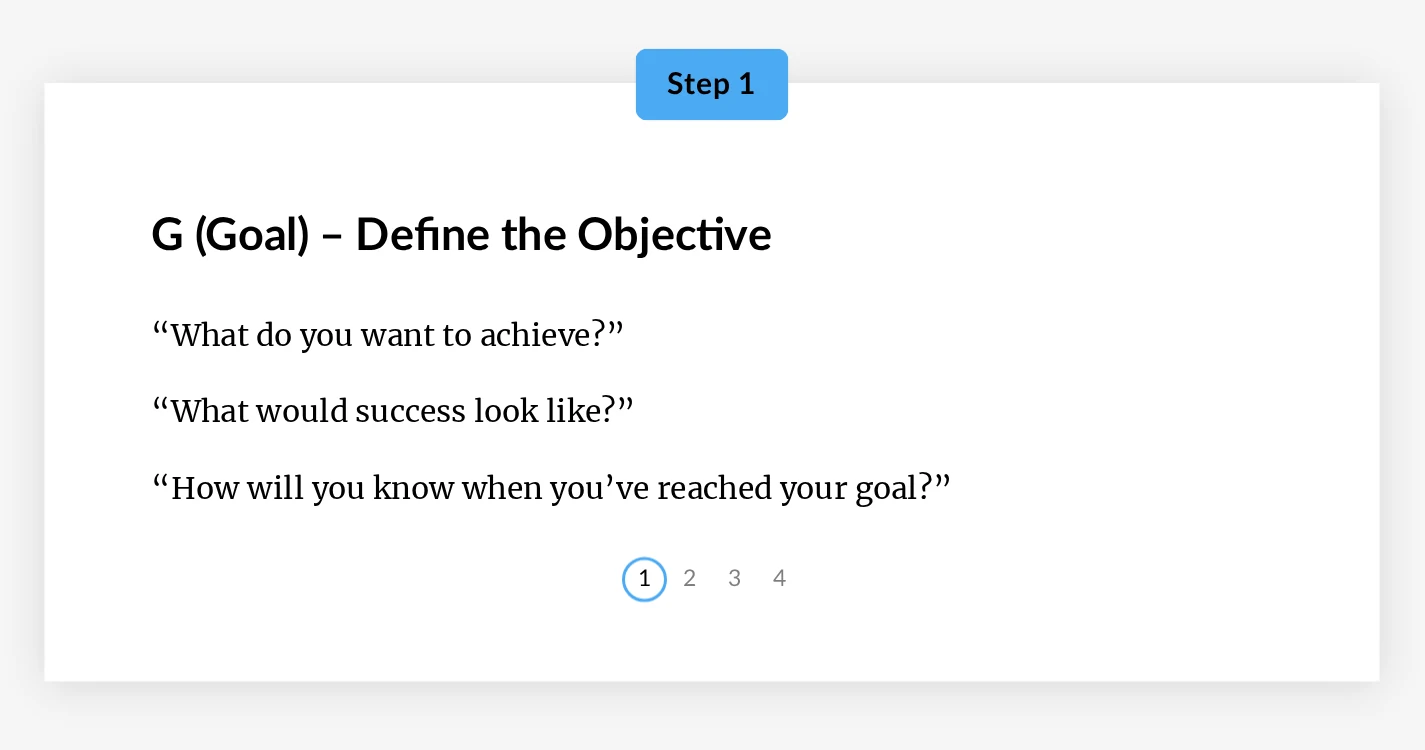
A senior executive faces competing demands. Learners move through Goal, Reality, Options, and Way Forward, reviewing coaching prompts at each stage.

Rise 360 process block showing Goal, the first of four GROW steps, with three example coaching questions and numbered step navigation.
David’s guided GROW conversation

The Goal stage asks what David wants to achieve and how he will recognize success. Learners navigate a fixed sequence of example questions, rather than choosing responses or changing the scenario outcome.

View full-size image ↗

Revisiting familiar situations connects Enso’s focus and framing with GROW’s conversation structure, making abstract principles concrete.

06 / Assessment & Reflection

Check understanding.
Reflect on practice.

Conceptual knowledge

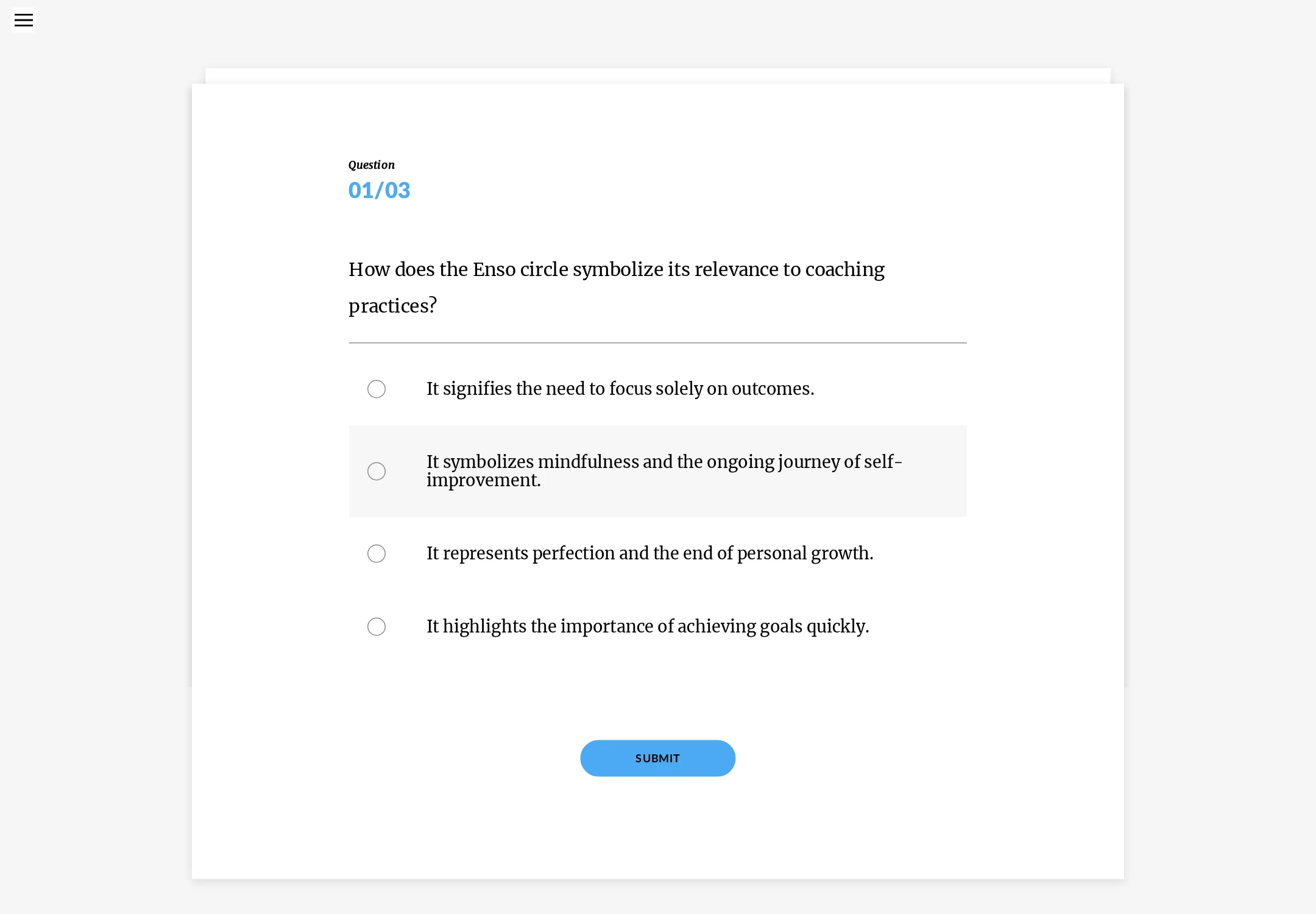
The Knowledge Test combines two multiple-choice questions with a six-pair matching question. The export configures an 80% passing score and unlimited retries. Multiple-choice items include explanatory correct/incorrect feedback; the test checks conceptual understanding rather than observed coaching performance.

Rise 360 Knowledge Test showing a multiple-choice question about what the Enso circle symbolizes in coaching.
Check understanding of the model

A question from the three-item test checks the relationship between the Enso circle, mindfulness, and ongoing growth.

View full-size image ↗

Reflective practice

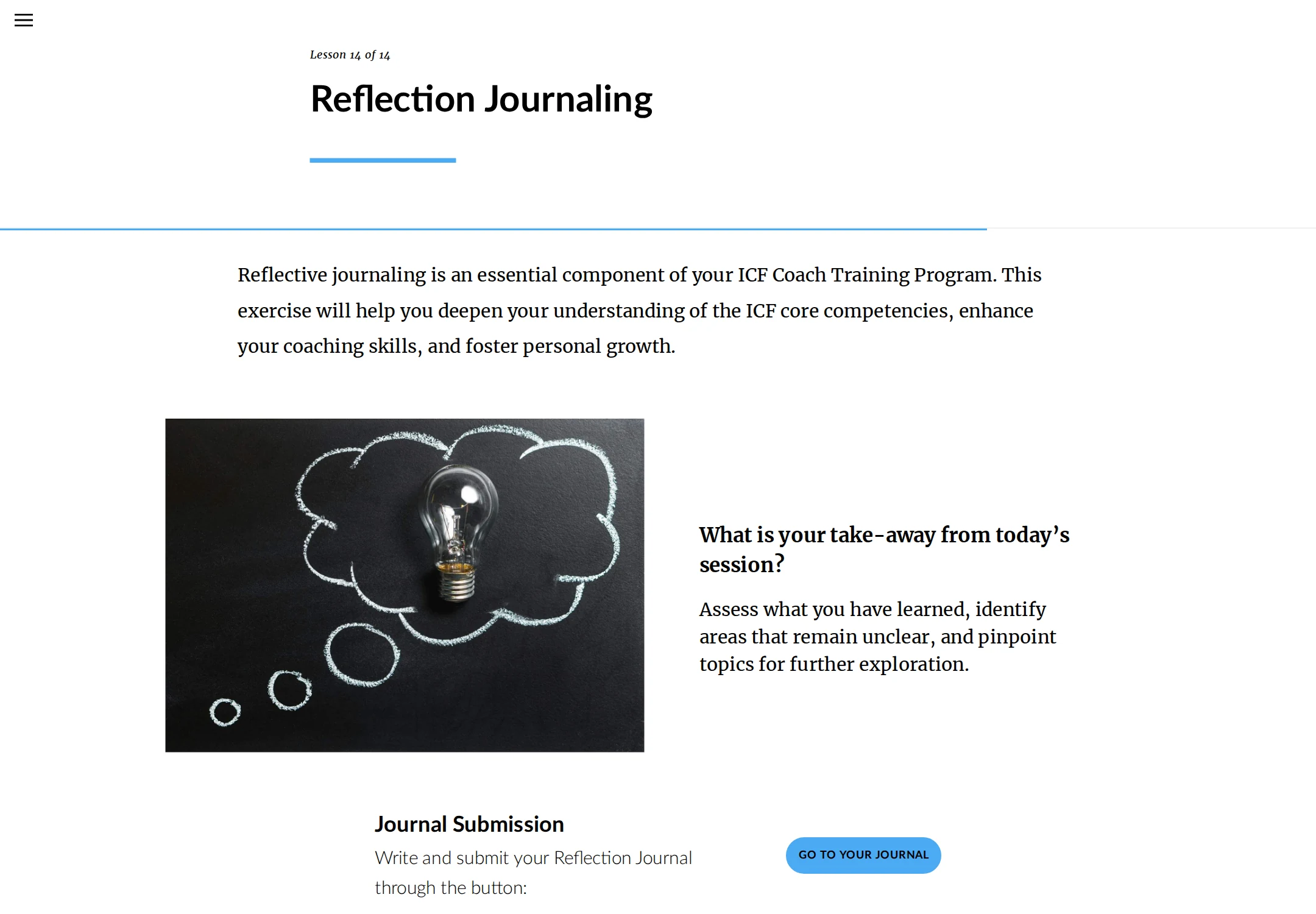
Reflection Journaling asks learners to identify their main takeaway, unresolved questions, and topics to explore further. A journal-submission button links to an external form in the original course; this portfolio shows the prompt without collecting responses.

Reflection Journaling lesson asking learners for their takeaway, unclear areas, and topics for further exploration.
Make space for reflection

A reflective prompt asks learners to articulate what they learned and where they need to go deeper. The original course links to an external journal form.

View full-size image ↗

Authentic screenshots captured from the supplied Module 9 export. Select any image to open the full-size capture.

07 / Key Takeaways

Connect the interaction
to the learning task.

The strongest design connection is between a coaching principle, a concrete question, and an opportunity to reflect. A next iteration could add more learner-generated question practice and validate the experience with representative learners before making claims about transfer to coaching practice.

← Back to selected work